Skin & Hair
GHK-Cu Copper Peptide: What the Research Shows
GHK-Cu is a tiny peptide that carries a copper ion and occurs naturally in your blood. Here is what lab, animal and cosmetic studies have looked at, and how to read that evidence calmly.
October 29, 2026 · 7 min read
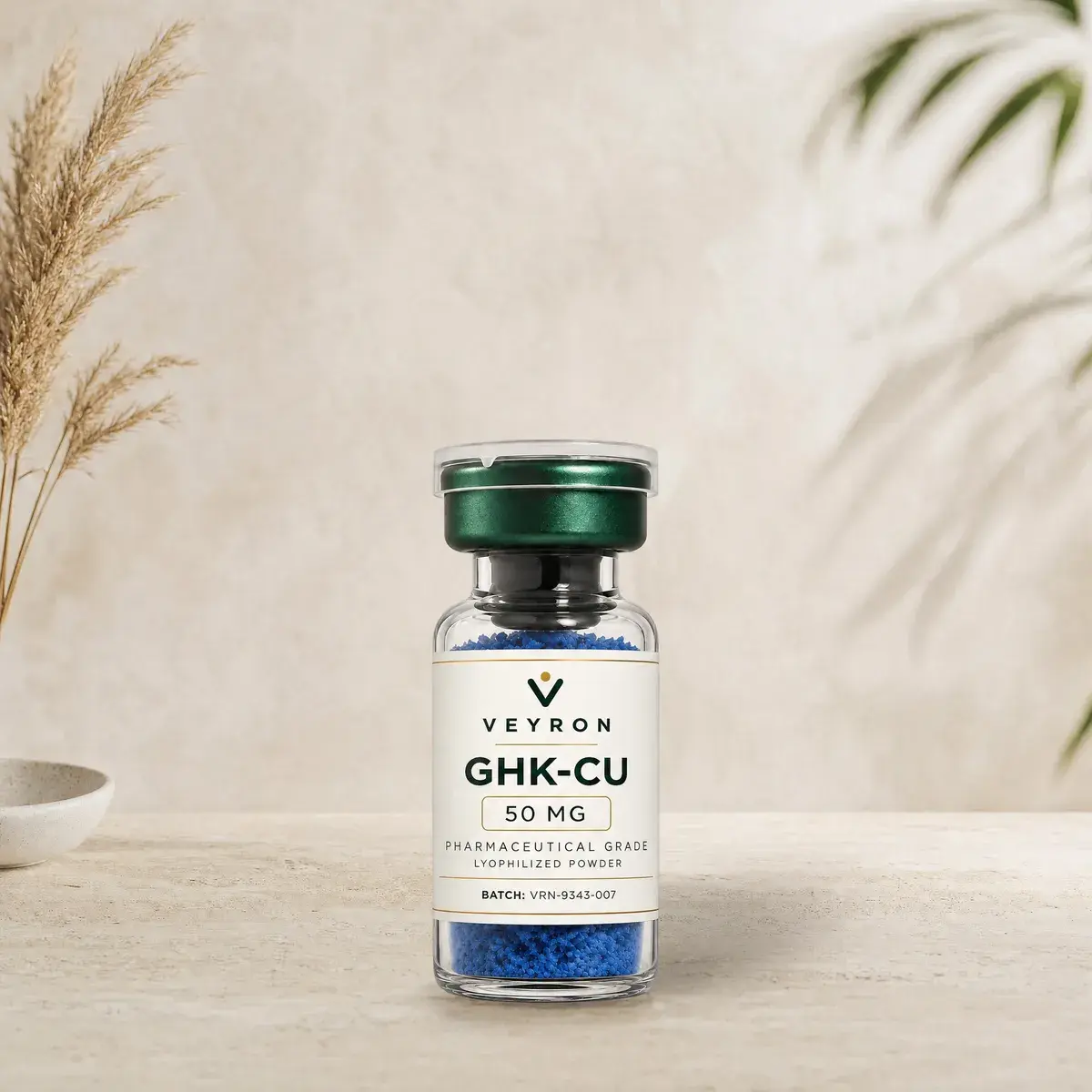
GHK-Cu is one of the most talked-about peptides in skincare, and also one of the oldest in the research literature. It is small, it occurs naturally in your body, and it has been studied for collagen, skin repair and hair for about fifty years. This guide walks you through what it is, where the research comes from, and which findings come from the lab, from animals or from cosmetic studies on people.
What GHK-Cu actually is
GHK is a tripeptide: a chain of just three amino acids, glycine, histidine and lysine (hence G-H-K). On its own it has a strong affinity for copper, and it readily binds a copper(II) ion. That pairing, the peptide plus its copper, is what people mean by GHK-Cu or simply "the copper peptide".
It is not a lab invention. GHK is found in human plasma, saliva and urine. According to a 2015 review by Pickart and colleagues, plasma levels are around 200 ng/mL at age 20 and drop to about 80 ng/mL by age 60. That decline is one reason the peptide attracted interest in research on skin ageing. Interestingly, the same GHK sequence is also built into type I collagen itself, so researchers have suggested it can be released locally when tissue is damaged.
Where it came from: the Pickart research
GHK was first described in 1973 by biochemist Loren Pickart and Melvin Thaler. They found a factor in human serum that helped liver cells survive longer in culture, and that factor turned out to be this small copper-binding tripeptide.
A key follow-up came in 1988, when a French group led by François-Xavier Maquart, working with Pickart, showed that GHK-Cu stimulated collagen production by fibroblasts (the cells that build connective tissue) in culture. The effect began at extremely low concentrations, between 10⁻¹² and 10⁻¹¹ M, and peaked at 10⁻⁹ M, without simply increasing the number of cells. Much of what is written about GHK-Cu today traces back to this line of work and to later reviews by Pickart, who has also worked in the copper-peptide skincare field. That is worth knowing, not as a reason to dismiss the work, but as context.
What has been studied, and in what kind of study
The research on GHK-Cu is broad, but it is spread across very different kinds of evidence. It helps to keep them apart.
Collagen and skin structure (lab studies)
In cell cultures, GHK-Cu has been studied for its effects on collagen, elastin and glycosaminoglycans, the building blocks of the skin's supporting matrix. Reviews describe it as influencing both the build-up and the breakdown of that matrix, which is how normal tissue remodelling works. These are test-tube findings: useful for understanding mechanisms, but not proof of what happens in a living person.
Wound healing (animal studies)
Wound healing is where most of the in vivo work sits, and it is almost entirely preclinical. Reviews describe faster healing in rabbits, rats, mice and pigs, as well as in dogs with pad wounds, including diabetic and ischaemic wound models in rats. Animal results are a starting point, not a guarantee that the same will happen in humans.
Skin appearance (topical cosmetic studies)
This is the one area with human data, and all of it involves creams applied to the skin. The 2015 review summarises several placebo-controlled cosmetic studies in women: a facial cream used for 12 weeks by 71 women with signs of photoageing, an eye cream tested on 41 women for 12 weeks, and a 12-week facial study in 67 women aged 50 to 59. Reported results included better skin firmness and density and fewer fine lines. A small biopsy study also reported increased collagen in 70% of women using a GHK-Cu cream on the thigh for a month, compared with 50% for vitamin C cream and 40% for retinoic acid. These were small studies, mostly reported through reviews rather than large independent trials.
Hair (lab and ex vivo studies)
Hair is often mentioned, but the evidence is thin. A 2007 study from Seoul National University used AHK-Cu, a close relative of GHK-Cu, and found it stimulated the growth of isolated human hair follicles and of dermal papilla cells in the lab. Pickart's 2008 review also lists an increase in hair follicle size among GHK-Cu's reported effects. Large controlled hair studies in people using GHK-Cu itself are not part of this evidence base.
| Area | Type of evidence | What was observed |
|---|---|---|
| Collagen production | Cell culture | More collagen made by fibroblasts at very low concentrations |
| Wound healing | Animal studies | Faster healing in several species and wound models |
| Skin appearance | Topical cosmetic studies in women | Firmer, denser-looking skin and fewer fine lines over 12 weeks |
| Hair | Lab and ex vivo (mostly the analogue AHK-Cu) | Longer isolated hair follicles, more dermal papilla cells |
Topical and vial forms as research materials
You will see GHK-Cu in two quite different forms, and they serve different research purposes.
- Topical serums and creams. This is the form used in the human cosmetic studies above. One practical challenge is that GHK-Cu is very water-loving, so getting it through the outer layer of the skin depends heavily on the formulation. A GHK-Cu and Snap-8 serum belongs in this category.
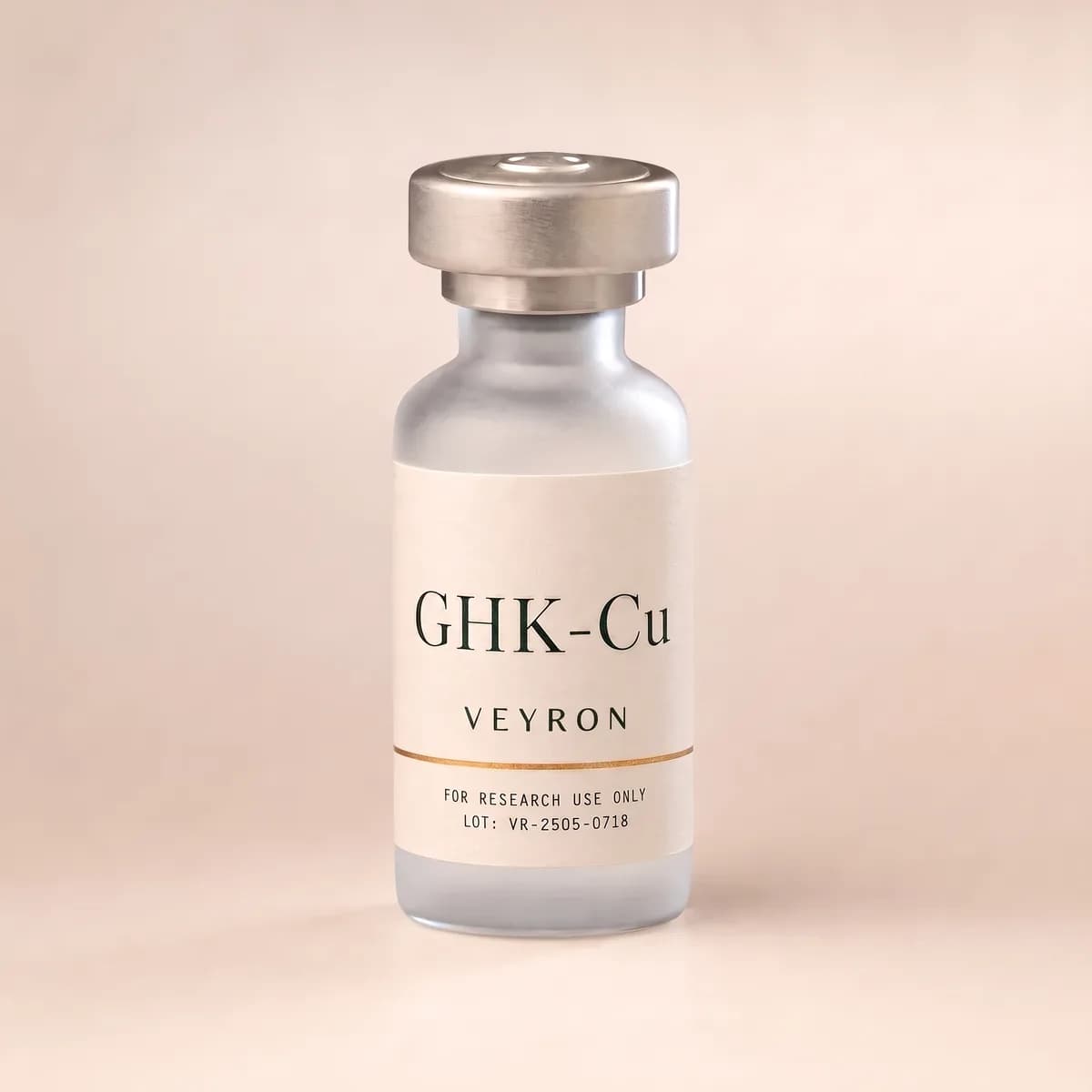
- Lyophilised powder in a vial. A freeze-dried form such as GHK-Cu (100 mg vial) is a laboratory research material. Injected GHK has been studied in animals, where it was reported to support healing throughout the body, but there are no established human protocols, and this article does not provide any.
Formulation studies also show that GHK-Cu is reasonably stable in water within a mildly acidic to neutral pH range, but sensitive to oxidative stress, which is why storage away from heat and light matters.
Why GHK-Cu is paired with Snap-8
Snap-8 (acetyl octapeptide-3) is a cosmetic peptide developed with expression lines in mind, such as those around the eyes and forehead. It works through a different route than GHK-Cu: where the copper peptide is studied for the supporting matrix of the skin, Snap-8 is aimed at the fine lines that come from repeated muscle movement. Combining them in one serum is a way to cover both angles in a single topical formula. Our GHK-Cu & Snap-8 Serum also contains PDRN and is blended fresh after you order.
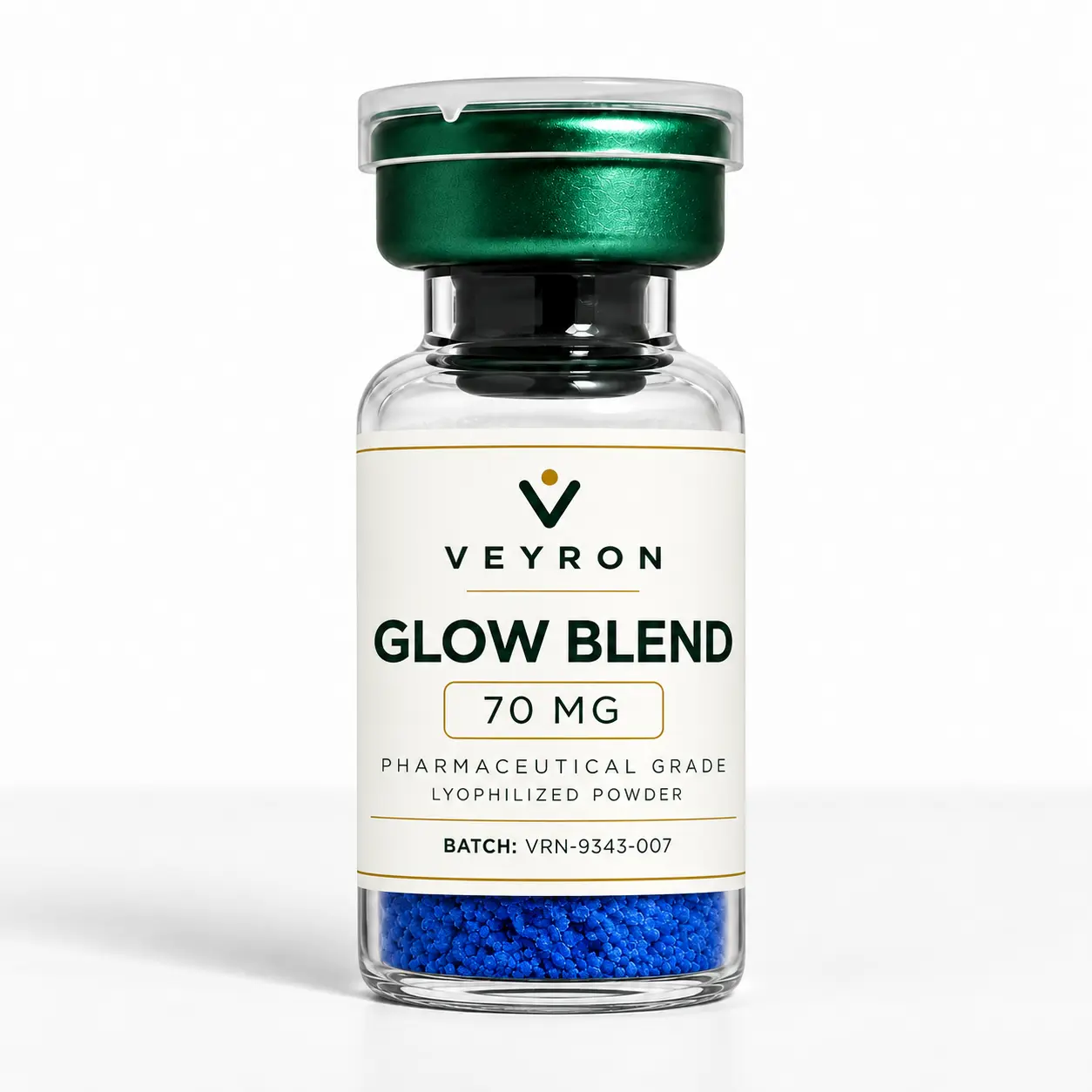
If you are interested in GHK-Cu alongside repair-focused peptides, the Glow Blend combines GHK-Cu with BPC-157 and TB-500 in a single research vial.
How to read the evidence calmly
- Most of the data is preclinical. Cell and animal studies explain how something might work, not what it will do for you.
- The human data is cosmetic and topical. The skin studies used creams over a few months in relatively small groups.
- Gene data is computational. Reviews cite database analyses suggesting GHK can shift the activity of thousands of genes. That is interesting, but it is not a clinical outcome.
- Much of the literature comes from one research circle. Independent, larger trials would make the picture clearer.
Want to see which peptides are studied around skin and hair? Browse the skin and hair collection, or answer a few questions in the Peptide Finder.
Sources
- Pickart L, Thaler MM. Tripeptide in human serum which prolongs survival of normal liver cells and stimulates growth in neoplastic liver. Nature New Biology. 1973;243(124):85-87. PubMed 4349963
- Maquart FX, Pickart L, Laurent M, et al. Stimulation of collagen synthesis in fibroblast cultures by the tripeptide-copper complex glycyl-L-histidyl-L-lysine-Cu2+. FEBS Letters. 1988;238(2):343-346. doi:10.1016/0014-5793(88)80509-x
- Pickart L. The human tri-peptide GHK and tissue remodeling. Journal of Biomaterials Science, Polymer Edition. 2008;19(8):969-988. doi:10.1163/156856208784909435
- Pickart L, Vasquez-Soltero JM, Margolina A. GHK peptide as a natural modulator of multiple cellular pathways in skin regeneration. BioMed Research International. 2015;2015:648108. doi:10.1155/2015/648108
- Pickart L, Margolina A. Regenerative and protective actions of the GHK-Cu peptide in the light of the new gene data. International Journal of Molecular Sciences. 2018;19(7):1987. doi:10.3390/ijms19071987
- Pyo HK, Yoo HG, Won CH, et al. The effect of tripeptide-copper complex on human hair growth in vitro. Archives of Pharmacal Research. 2007;30(7):834-839. doi:10.1007/BF02978833
This article is for information only and is not medical advice. It does not describe any use in humans. If you have questions about your skin, hair or health, please talk to your doctor or a dermatologist.
Mentioned in this article
Not sure which one fits you?
Answer a few questions and the Peptide Finder suggests a match in 60 seconds.