Healthy Aging
Epitalon explained: what the research really shows
Epitalon is a small four-amino-acid peptide from Russian ageing research. Here is where it comes from, what cell, animal and human studies have looked at, and how solid that evidence is.
October 29, 2026 · 7 min read
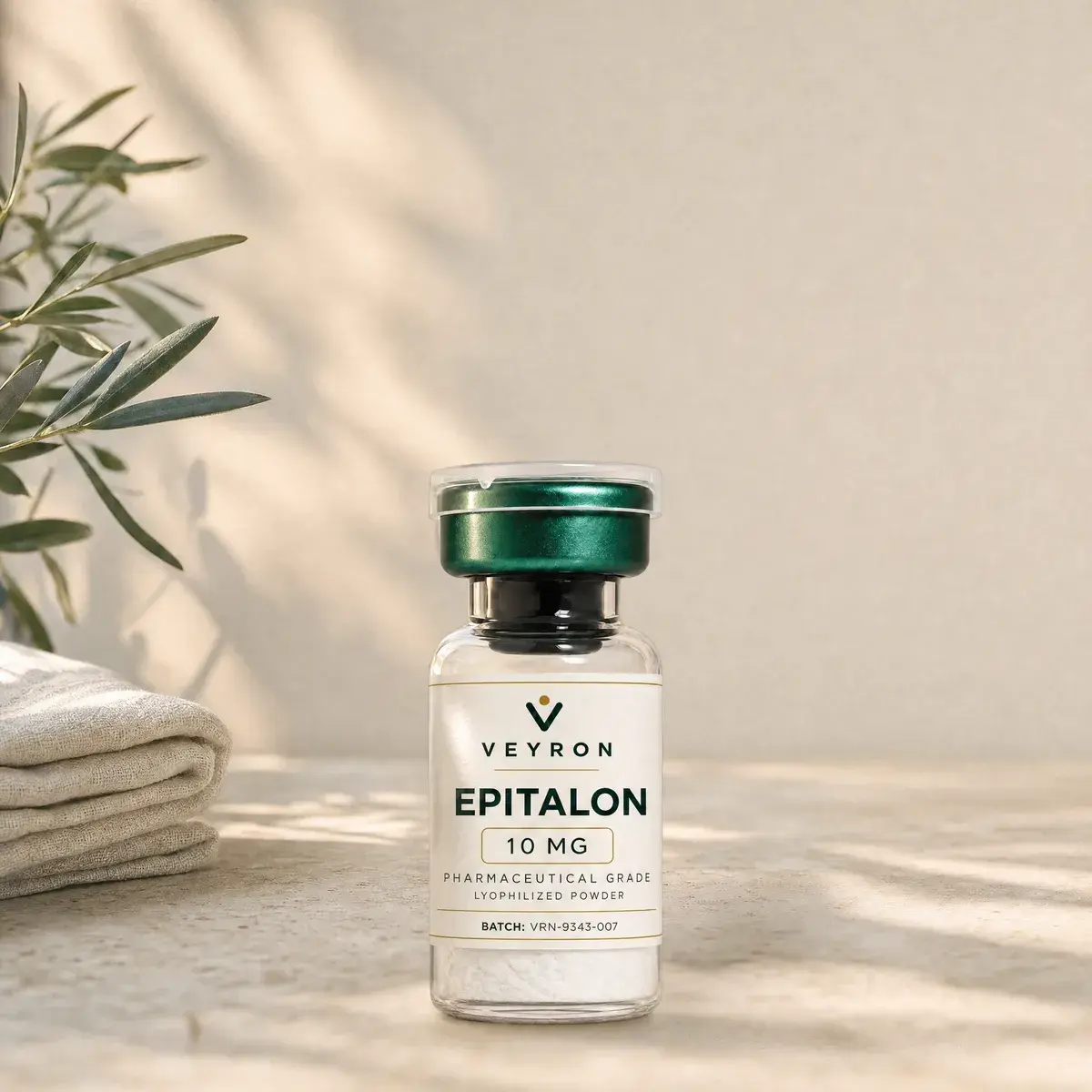
Epitalon comes up in almost every conversation about peptides and ageing, usually alongside big words like "telomeres" and "longevity". The real story is quieter and more interesting: a tiny peptide, decades of work by one research school in St. Petersburg, a handful of independent lab studies, and very little modern human data. Here is what you should know, without the hype.
What is Epitalon?
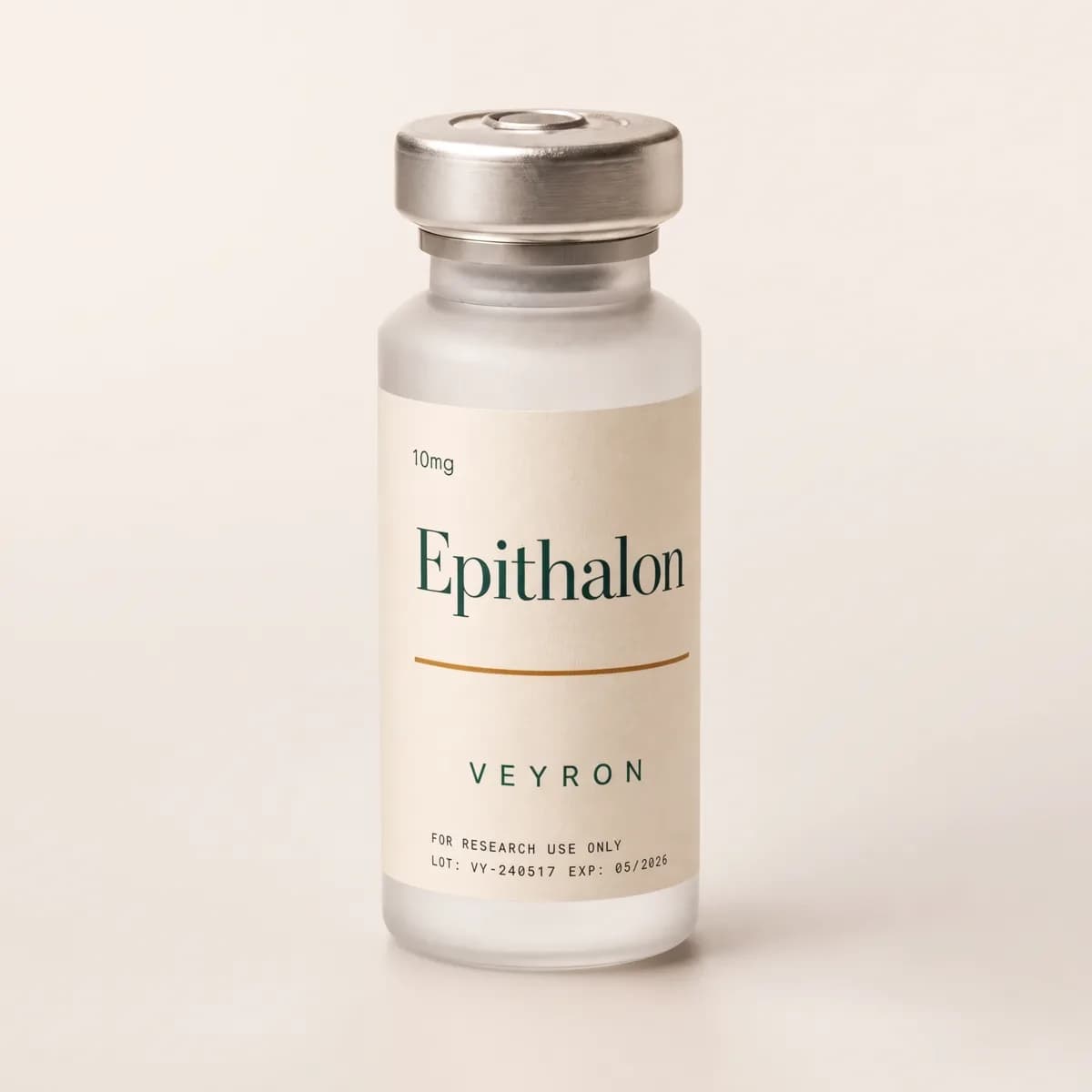
Epitalon (also written Epithalon or Epitalone) is a synthetic tetrapeptide: a chain of just four amino acids, alanine, glutamic acid, aspartic acid and glycine. That is why you will also see it called AEDG, after the one-letter codes for those amino acids.
Its roots lie in the work of Professor Vladimir Khavinson and colleagues at the St. Petersburg Institute of Bioregulation and Gerontology. They first studied Epithalamin, a mixture of peptides extracted from the bovine pineal gland, the small gland in the brain that produces melatonin. Epitalon was then designed based on the amino-acid composition of that extract, as a short, defined molecule that could be made in the lab.
That distinction matters later on: Epithalamin and Epitalon are not the same thing. Several of the human studies you may read about used the extract, not the synthetic tetrapeptide.
Telomeres and telomerase: the cell-culture findings
Telomeres are protective caps at the ends of chromosomes. They tend to shorten each time a cell divides, which is why researchers treat telomere length as one of the biomarkers of ageing. Telomerase is the enzyme that can rebuild them.
In 2003, Khavinson's group reported that adding Epitalon to cultures of human fetal fibroblasts, cells that normally have no telomerase activity, led to expression of the enzyme's catalytic subunit, measurable telomerase activity and longer telomeres. It was a small laboratory study, but it is the origin of most of the "telomere peptide" reputation.
For a long time there was little independent follow-up. In 2025, a team at Brunel University London published a quantitative study in normal human epithelial cells, fibroblasts and breast cancer cell lines. In the normal cells they saw dose-dependent telomere lengthening linked to higher hTERT expression and telomerase activity. In the cancer cell lines, telomeres also lengthened, but mainly through a different route called ALT (alternative lengthening of telomeres).
Two things are worth keeping in mind. These are cells in a dish, not people. And telomere lengthening is a double-edged topic in biology, because cancer cells also rely on keeping their telomeres long. Cell results tell researchers where to look next; they do not show what happens in a whole body.
Animal lifespan studies
The best-known animal study was published in 2003 by Vladimir Anisimov, Khavinson and co-workers. Female mice received either Epitalon or saline from the age of three months for the rest of their lives, with 54 animals per group.
- Average lifespan, food intake and body weight did not differ between the groups.
- The longest-living 10% of Epitalon-treated mice lived 13.3% longer than their control counterparts, and maximum lifespan was 12.3% higher.
- Chromosome aberrations in bone-marrow cells were 17.1% lower, and age-related decline of the oestrous cycle was slowed.
- Total tumour incidence did not change, although leukaemia was less frequent in the Epitalon group.
These are interesting signals, but they come from one strain of mice and largely from the same research network. Effects on "maximum lifespan" in a small group are also statistically fragile. In short: promising animal data, not proof of anything in humans.
Melatonin and the body clock
Because Epitalon traces back to the pineal gland, a lot of research has looked at melatonin, the hormone that helps set your circadian rhythm. Melatonin output tends to fall with age, especially at night.
In a 2005 study in rhesus monkeys, older animals (20 to 27 years) had lower night-time melatonin and higher baseline glucose and insulin than young animals (6 to 8 years). After Epitalon, the older monkeys showed a rise in night-time melatonin and changes in glucose and insulin handling, while the young monkeys showed no change. Small studies in older people, published mainly in Russian-language journals, have reported similar melatonin effects for both Epithalamin and Epitalon.
This is one of the more consistent threads in the literature. It is still a thread based on small groups, though, and mostly from the same research circle.
What about humans?
This is where honesty matters most. The most-quoted human paper, by Khavinson and Morozov (2003), followed 266 older people over six to eight years. They reported lower mortality in groups given pineal and thymus peptide preparations than in controls. But the pineal preparation in that study was Epithalamin, the extract, not synthetic Epitalon, and the design does not match what we would now expect from a large, randomised, placebo-controlled trial.
A 2026 narrative review by an American group, which looked at Epitalon and Epithalamin separately, concluded that human evidence for Epitalon is limited to small physiological or biomarker studies and one older controlled study in an eye condition (retinitis pigmentosa). The authors found no adequately powered randomised trial establishing efficacy, and called pharmacokinetic, dose and long-term safety data inadequate. Their summary: biologically active, clinically unproven.
The evidence at a glance
| Type of study | What was looked at | How strong is it? |
|---|---|---|
| Cell cultures | Telomerase activity and telomere length | Reproduced by an independent UK lab; still only cells |
| Mice | Lifespan, chromosome damage, tumours | Interesting signals; mostly one research network |
| Monkeys | Night-time melatonin, glucose and insulin | Small groups; consistent direction |
| Humans | Melatonin, biomarkers, long-term follow-up | Small, older studies, often with the extract; no large modern trials |
Reading the research with a clear head
If you are exploring Epitalon for laboratory research, a few habits help:
- Check which molecule was used. Epithalamin (extract) and Epitalon (synthetic AEDG) are often mixed up online.
- Check the model. Cells, mice, monkeys and people answer very different questions.
- Look for independent replication. The 2025 Brunel study is valuable precisely because it came from outside the original group.
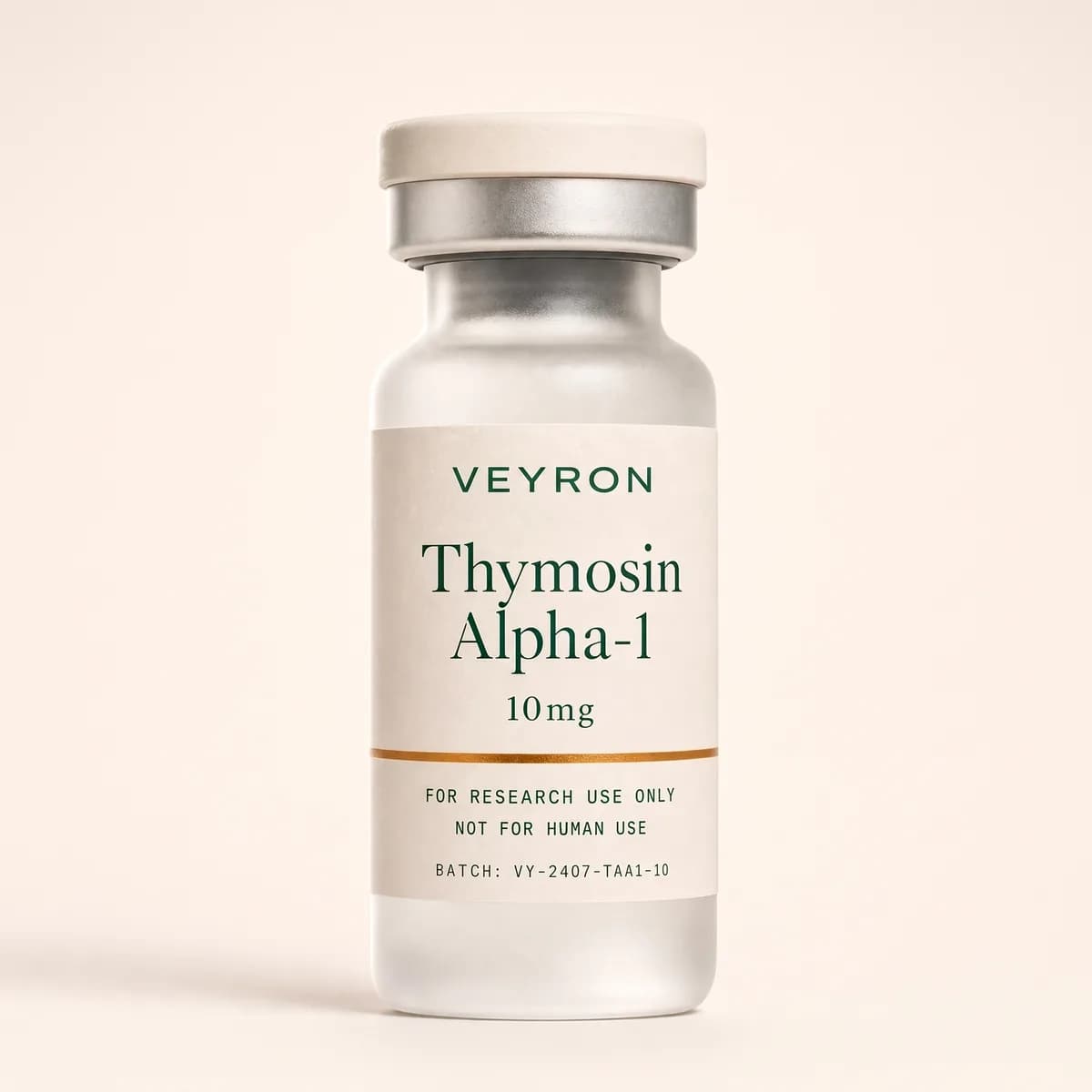
Khavinson's group also studied thymus peptides alongside pineal ones. If that side interests you, thymosin alpha-1 is a different, thymus-derived peptide studied mainly in immune research. You can find related compounds on our healthy ageing page, or use the Peptide Finder to narrow things down by research area.
Sources
- Khavinson VKh, Bondarev IE, Butyugov AA. Epithalon peptide induces telomerase activity and telomere elongation in human somatic cells. Bull Exp Biol Med. 2003;135(6):590–592. PubMed 12937682
- Anisimov VN, Khavinson VKh, Popovich IG, et al. Effect of Epitalon on biomarkers of aging, life span and spontaneous tumor incidence in female Swiss-derived SHR mice. Biogerontology. 2003;4(4):193–202. PubMed 14501183
- Goncharova ND, Vengerin AA, Khavinson VKh, Lapin BA. Pineal peptides restore the age-related disturbances in hormonal functions of the pineal gland and the pancreas. Exp Gerontol. 2005;40(1–2):51–57. PubMed 15664732
- Khavinson VKh, Morozov VG. Peptides of pineal gland and thymus prolong human life. Neuro Endocrinol Lett. 2003;24(3–4):233–240. PubMed 14523363
- Al-Dulaimi S, Thomas R, Matta S, Roberts T. Epitalon increases telomere length in human cell lines through telomerase upregulation or ALT activity. Biogerontology. 2025;26(5):178. doi:10.1007/s10522-025-10315-x
- Jain A, Gallacher DM, Issa MA, et al. Epitalon and Epithalamin: a narrative review of mechanistic, preclinical, and clinical evidence. Int J Mol Sci. 2026;27(19):8922. doi:10.3390/ijms27198922
This article is for information only and is not medical advice. Epitalon is not an approved medicine. If you have questions about your health or ageing, please talk to your doctor.
Mentioned in this article
Not sure which one fits you?
Answer a few questions and the Peptide Finder suggests a match in 60 seconds.